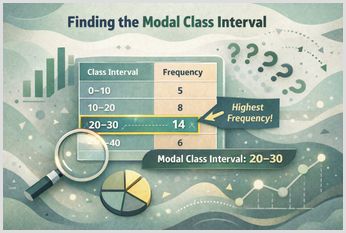
You may see statistics questions focused on grouped data for GCSE Maths. The data is organised into ranges called "class intervals", and a frequency shows how many values fall into each range. You are expected to find the modal class interval for these data groupings.
The modal class interval shows the range of values that occur most in a data set. It clearly shows statistically where most of the data is concentrated. This is a common question in GCSE exams that involve frequency tables and grouped data.
This article will explain what the modal class interval is, how to find it, and the ways it is different from standard mode. A worked example is included, and practice questions to test your understanding.
If you need help learning about modal class intervals, TeachTutti has top Maths GCSE tutors. Every tutor is verified and will tailor lessons to your specific needs, such as how to calculate the modal class for given data.
Grouped frequency table
A grouped frequency table is a type of frequency distribution table that sorts data into ranges of values. This is especially useful for large data sets, making them easier to analyse. Data is grouped into class intervals rather than a specific value. A frequency shows the values falling into this range.
In the example below, a teacher has recorded the test results of a class. It makes more sense to group the results as below, rather than as individual marks. The "Test Score" column is the class intervals, such as a mark range from 0 to 10. The "Frequency" is how many results fell within each range:
| Test score | Frequency |
| 0-10 | 2 |
| 10-20 | 5 |
| 20-30 | 11 |
| 30-40 | 7 |
Grouping data in this way makes it easier to interpret the data and spot patterns. This includes finding the median and mean from a grouped frequency table, the modal class interval, and the range of the data. It is a common topic in GCSE exam papers, such as when working through distributions of values.
You can find the modal class interval by finding the interval with the highest frequency in the table, as we will explore below.
Modal Class Interval
Modal class is the class with the highest frequency in a grouped frequency table is called the modal class interval. It is the range that has the greatest set of data points.
The exact values aren't shown when the data is grouped into intervals. We will instead see ranges, such as 0-10, 10-20, 20-30, and so on. The frequency for each range is how many values fall within this interval.
The table below shows the number of hours a class of students spends revising for an exam. The highest frequency is 12 and the interval is 4-6. This means the modal class interval is 4-6 hours, as most students revised for this length of time.
| Hours of revision | Frequency |
| 0-2 | 4 |
| 2-4 | 7 |
| 4-6 | 12 |
| 6-8 | 6 |
Put simply, the modal class from a grouped frequency table tells us the most common range of values, rather than a specific value.
Class Interval
The class interval refers to the range of values chosen to group data in a frequency table. The raw data is sorted into intervals that cover a certain span.
In the example below, exam test scores from 0 to 40 are grouped in ranges of 10. The frequency is how many values fall within each range. Class intervals are especially useful when there are many values in a data set, helping statisticians to spot patterns or trends quickly.
| Score | Frequency |
| 0-10 | 3 |
| 10-20 | 8 |
| 20-30 | 11 |
| 30-40 | 5 |
When deciding on the class intervals within a set of data, aim to keep them equal in width, e.g. every interval covers 10 values. They should also be continuous, covering the entire data without gaps. You can see this clearly with a histogram, which is a visual representation of a grouped frequency table.
How to find the Modal Class Interval
To determine the modal class interval, you need to find the class interval with the highest frequency. Follow the steps below:
- Frequency column - Look at the number of data values that fall within the class interval. This is the frequency. It will contain a single integer
- Find the largest frequency - Look down the column and find the highest number
- Get the class interval - Look along the row at the class interval for this frequency
- State the modal class interval - The class interval you have identified is the modal class interval
In the example below, the highest frequency is 14. This relates to the class interval 160-170, which means the modal class is the class interval of 160-170 cm.
| Height (cm) | Frequency |
| 140-150 | 3 |
| 150-160 | 9 |
| 160-170 | 14 |
| 170-180 | 6 |
Mode formula
The formula for mode is: L + ((fm - f1) / ((fm - f1) + (fm - f2))) × w
This can be broken down as follows:
- L - Lower limit of the modal class
- fm - Frequency of the modal class
- f1 - Frequency of the class before the modal class
- f2 - Frequency of the class after the modal class
- w - Width of the social class
This formula calculates the exact mode after the data is grouped into class intervals. Putting these values into the formula will give an estimate of the mode within this interval. For example, if the modal class is 65-70:
- L = 65
- fm = 13
- f1 = 11
- f2 = 6
- w = 5
Worked example
In the grouped frequency table, a teacher has recorded how long students spent revising for a mock test:
| Revision time (hours) | Frequency |
| 0-2 | 5 |
| 2-4 | 9 |
| 4-6 | 14 |
| 6-8 | 7 |
| 8-10 | 3 |
We need to find the modal class interval:
- Focus on the frequency column - This shows how many students are in each revision time period. The frequencies are: 5, 9, 14, 7, 3
- Find the highest frequency - 14 is the largest number of students for a class interval
- Find the matching class interval - The frequency of the class interval 4-6 hours is 14
- Give the answer - The modal class interval is 4-6 hours. The majority of students revised for this duration

Modal Class Interval vs Mode
The modal class interval and the mode can sometimes be confused. The mode is the single value that is most common in a data set. For example, the mode is 5 in the following data set, as it occurs more than any other number: 3, 5, 5, 7, 9, 7, 5.
Individual values aren't shown when data is grouped in class intervals. The data is put in ranges, such as 10-20 and 20-30. This means we can't find the exact mode. Instead, we can only find the modal class interval, which is the interval or range with the highest frequency.
| Term | Meaning |
| Mode | The most common individual value |
| Modal class interval | The range containing the most values |
In the table below, the interval 20-30 contains the highest frequency, which means it's the modal class interval. This is despite not knowing the exact value that is most common within this range.
| Score | Frequency |
| 0-10 | 4 |
| 10-20 | 7 |
| 20-30 | 12 |
| 30-40 | 6 |
Common Exam Mistakes
Small mistakes can have a outsized impact on your marks in maths, particularly in the field of statistics. We have outlined common errors related to the modal class interval for you to watch out for.
The grouped frequency table below will be referenced in the common mistakes.
| Time (minutes) | Frequency |
| 0-10 | 4 |
| 10-20 | 9 |
| 20-30 | 15 |
| 30-40 | 6 |
- Write the frequency, not the interval - A common mistake is to give the highest frequency number as the answer, rather than the class interval for this row. In the table above, the highest frequency is 15. This means the modal class interval is 20-30, which corresponds to this frequency
- Choose the largest interval - Watch that you don't give the largest numbers in the class interval as the answer. It is always the highest frequency, not the range for the interval. For example, some students may wrongly select 30-40 in the table above
- Confuse the modal class interval and the mode - Remember that the mode is the most common value, while the modal class interval is the interval range that has the most values. You normally can't find the exact mode, so a modal class interval is used instead
Modal class example questions
The following worked examples show how to practice finding the modal class interval. Each example is worked out step-by-step.
Example 1
The table below shows how many books students read during term-time.
| Books read | Frequency |
| 0-2 | 6 |
| 2-4 | 11 |
| 4-6 | 9 |
| 6-8 | 4 |
- Focus on the frequency column - The frequencies are 6, 11, 9, and 4
- Find the highest frequency - The highest frequency is 11
- Find the matching interval - The frequency 11 corresponds to the class interval 2-4
The modal class interval is 2 - 4 books.
Example 2
The table below shows how long students spent completing homework.
| Time in minutes | Frequency |
| 10-20 | 5 |
| 20-30 | 8 |
| 30-40 | 14 |
| 40-50 | 7 |
- Focus on the frequency column - These values are 5, 8, 14, and 7
- Find the largest frequency - The largest frequency is 14
- Find the corresponding class interval - The class interval is 30-40
The answer is that most students take 30 - 40 minutes completing homework.
Example 3
This grouped frequency table show how far students travel to school.
| Distance (miles) | Frequency |
| 0-1 | 3 |
| 1-2 | 7 |
| 2-3 | 12 |
| 3-4 | 8 |
| 4-5 | 2 |
- Focus on the frequency column - The frequencies are 3, 7, 12, 8, and 2
- Find the highest frequency - The highest value is 12
- Return the class interval - The class interval is 2-3 m for this frequency
Most students travel 2 - 3 miles to reach school.
Quiz questions
1
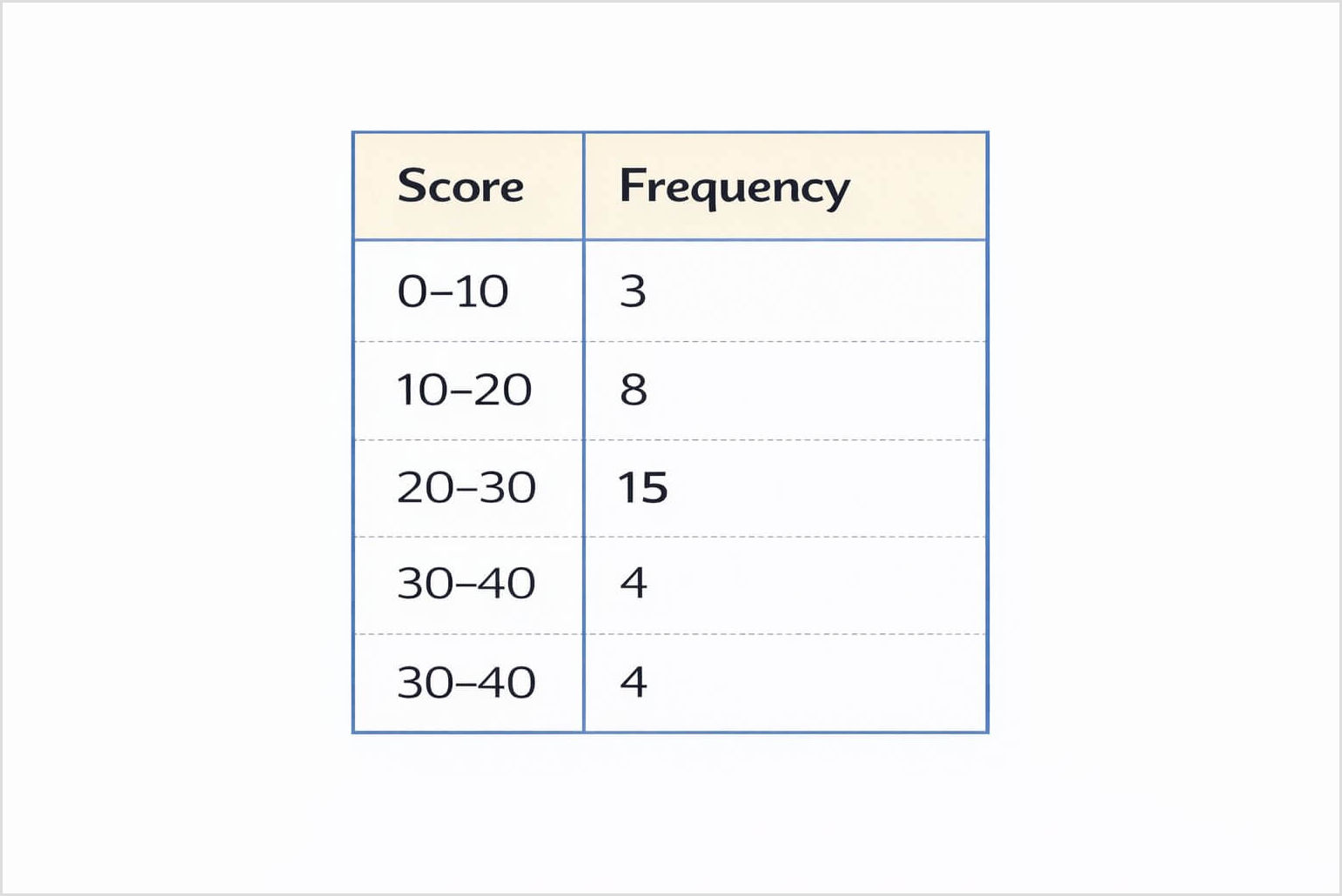
What is the modal class interval in the grouped frequency table?
2
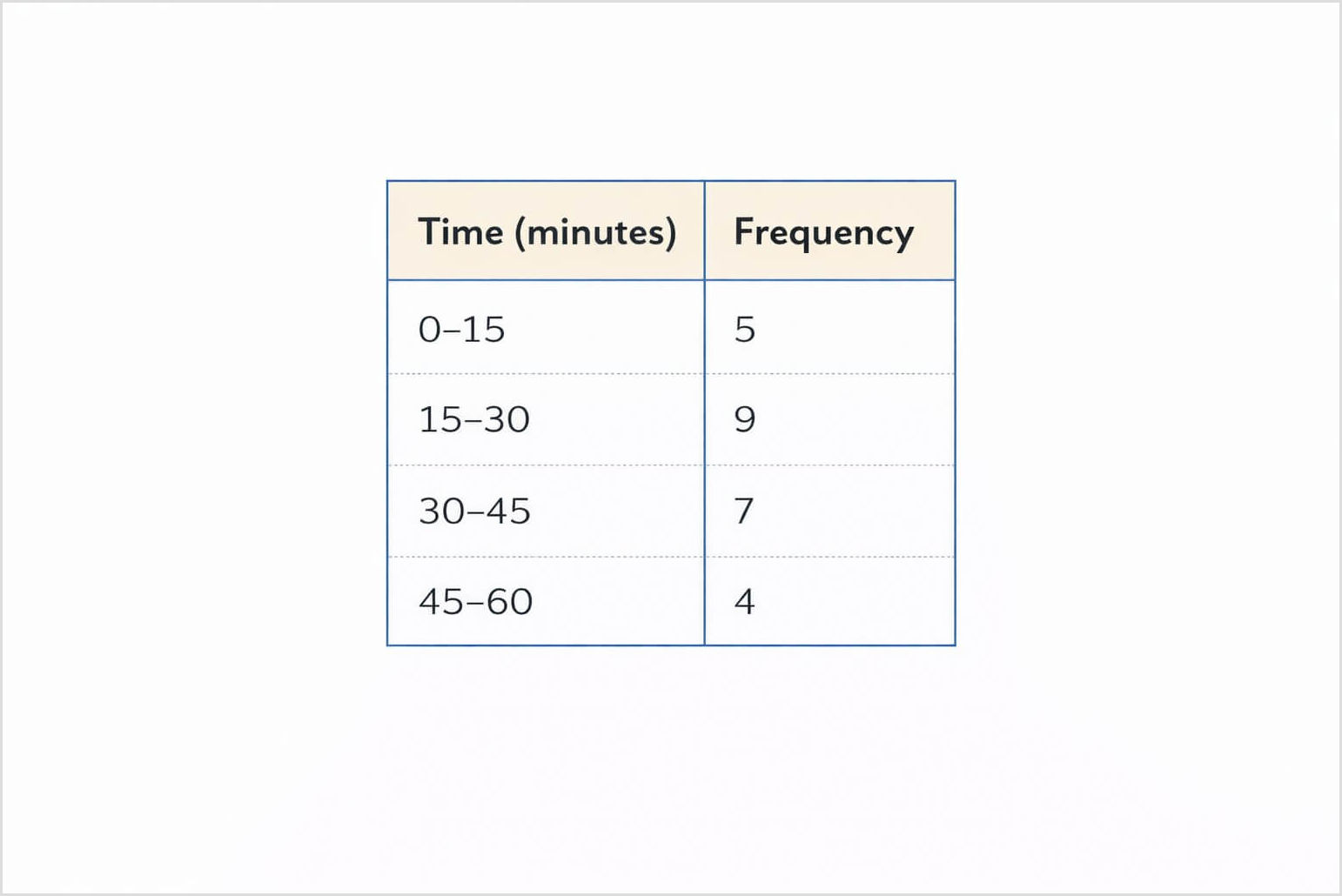
The table shows the length of time students spend revising. What is the modal class interval?
3
What is the modal class interval?
Final thoughts - How to work out the modal class
We have learnt that the modal class interval is the range with the highest frequency in a grouped frequency table. It is the class interval where most data points take place. To find the modal class interval: look at the frequency column, find the largest frequency value, and look along this row to return the class interval. This is the modal class interval.
Remember that this is not the frequency itself, but the range of values associated with it. Understanding this topic is an important part of GCSE Maths and will feature in exam questions. For further reading, learn about histograms, which are a visual representation of a grouped frequency table. You can also test your understanding against a past paper on frequency tables by MathsGenie.
If you need help getting to grips with modal class intervals or other topics in the curriculum, TeachTutti has qualified GCSE Maths tutors to support your revision. Lessons can be in-person or online using the TeachTutti learning platform.