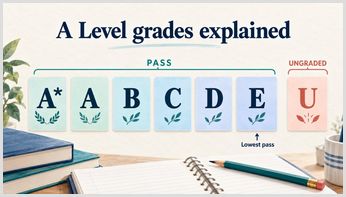
The following grades are passes at A Level: A*. A, B, C, D, and E. The lowest pass is E, while U means you have failed the exam. It stands for "ungraded". Despite passing a subject, this doesn't guarantee you have met the entry requirements for a university course you're interested in, an apprenticeship, or a job.
This article explains the pass and fail grades for A Level. We explain the British grading system and the effect your results have on your next steps. We'll also cover your next steps if you miss a target grade, which include appealing the exam result or taking a gap year to retake a subject.
If you want help learning the curriculum for a specific subject or developing your exam technique, TeachTutti can support you with qualified, safety-checked tutors. Follow the link to learn how tuition works with TeachTutti, including our flexible approach to in-person and online lessons.
What A-Level grade is a pass or fail?
Any grade from A to E is a pass at A Level. The highest possible grade is A*, while E is the lowest passing grade. A U result means your result was below the E grade boundary, so you failed the subject.
You receive UCAS points for each passing grade. The amount varies on the grade received and is listed by some universities and colleges in their entry requirements:
| A Level result | Result | UCAS points |
| A* | Pass | 56 |
| A | Pass | 48 |
| B | Pass | 40 |
| C | Pass | 32 |
| D | Pass | 24 |
| E | Pass - lowest passing grade | 16 |
| U | Fail - ungraded | 0 |
D and E are passing grades at A Level. You don't need a C to pass, which is a common assumption.
Despite D and E being passing grades, they may not meet the requirements for a university course or apprenticeship. For example, a university conditional offer may ask for an A grade in Maths. If you receive a D in this subject, you will pass the A Level but miss the offer.
U stands for "ungraded". This means your marks fall below the lowest passing grade for the subject. You have therefore failed the subject and won't receive any UCAS Tariff points. This grading won't affect the marks you've received in your other subjects.
What is a pass percentage? UK grading system
There isn't a fixed percentage to pass an A Level. The mark required for an E grade - the minimum for a pass - depends on your subject, exam board, and the exam series.
The minimum mark is known as a "grade boundary". Exam boards set boundaries after marking. They consider the difficulty of the assessments and evidence of the student's work. For example, if the work for a particular exam is lower than usual due to increased difficulty, the grade boundary will be lowered. For this reason, it's bad practice to base your mark on the percentage for a minimum pass from previous years.
If you want to find the boundary, look at the published grade boundaries for your exam board - such as AQA or Edexcel - subject, and exam series. Use the overall qualification boundary to calculate your final grade. A boundary for one paper doesn't give a clear indication of your overall performance for the A Level subject.
Is a pass grade for A-Levels enough for university admissions?
You aren't guaranteed entrance to your preferred university course if you pass your A Levels. Every university degree has different entrance requirements, which further depend on the university itself. For example, admission to a course at Cambridge or Oxford University will typically require high grades in the required subjects.
Some entrance requirements will be grade-based, while others focus on UCAS Tariff points. For example, one university course may ask for AAB grades, while a points-based offer may ask for 130 UCAS points. Don't assume that if you meet the requirements, you'll be admitted. The course may also have subject requirements or restrict the qualifications that count.
If you miss your offer, check your application status on UCAS. Talk to the university's admissions team, as they may take extenuating circumstances into account, and you may still be considered. For example, they may require you to move from a joint honours degree to focusing on one of these subjects.
What if you miss a target A Level grade? Next steps after results day
Results day can be tough if you miss your target grades, but remember you have options. Start by talking to your school about your marks and what they suggest you do next.
Even if you have missed your target grades, you should still check your application status on UCAS. Even if you're declined, you should contact university admissions to discuss your status. You can also go through clearing if you still want to go to university and are willing to consider different universities and/or courses. Follow the link for UCAS guidance on clearing.
If you don't trust the mark you received, ask your teacher or exams officer to consider a review of marking. If there is a marking error, your mark could go up. Be aware that your mark could also remain the same or even go down. If you go down this route, seek advice quickly as deadlines apply, and you'll need to ask your university if they will hold the place until the outcome.
Another option is to retake an A Level if you fail or get a lower grade than you targeted. Resits normally take place in the next summer exam series, so you'll need to take a gap year. For other qualifications, such as International A Levels, there may be different arrangements for when you sit the retake. Check the government guidance on the A Level resit schedule.
If you decide to retake an A Level, you need to consider whether to return to your school or study independently. For the latter, you'll need to enter through an exam centre that accepts private candidates. Check the entry deadlines, exam fees, and any tuition or administration charges. Remember that you don't need to retake every subject. If one subject is below your target, you should focus solely on this qualification, making sure to check your university's policy on resits.
When you retake a subject, you're normally required to retake all exam papers. You can't retake just the paper you struggled with. It's possible to carry forward coursework marks or a science practical endorsement, which depends on the exam board and qualification. If you're sitting the exam independently, your exam centre should check the rules and be able to inform you.
Tutor support to meet your grade boundaries
If you're preparing for your A Levels or are retaking one or more subjects, you may want to consider tutoring to support your preparation. Before taking this step, consider what you need help with, such as exam technique or a weak topic.
An experienced tutor will provide bespoke tuition suited to your needs. They will help you identify which areas to prioritise, work through learning resources, such as past papers, and build a revision plan to maximise your grade.
TeachTutti has tutors for the main A Level subjects. This includes:
If you need help with another subject, browse TeachTutti’s subject list. When you have chosen a tutor, message them or book a free 15-minute consultation lesson. Before booking a lesson, you should discuss your exam board, your current progress, and your target grade.
Final thoughts - A Levels and the British grading system
The lowest pass at A Level is an E grade. U stands for "ungraded", which means you failed the subject. Remember that passing your subject isn't the same as meeting the requirements for your next step, whether it's admission to a UK university, enrolling in an apprenticeship, or starting a job.
If you're not happy with your A Level results, the first point of contact should be your school or college. They'll be best placed to give you specialised, impartial advice. You can request a review of marking, retake the subject over a gap year, or take the time to decide on an entirely new approach.
If you need support with your A Levels, TeachTutti are happy to help you choose a suitable tutor. Every tutor is DBS-checked, and you can choose between in-person and online tuition. Learn how lessons work at TeachTutti, including our ongoing support.